Showing posts with label Marvel. Show all posts

Sunday, 24 February 2019

Oscars 2019

Warning: This post will contain spoilers for most of the Oscar nominated films of this year.

Well hello there.  It's been a while.  Apologies for the radio silence - poor life planning on my part.  But the return of the 2019 Academy Awards seemed like a good place to jump back into blogging.  So here we go...

It's been an odd year thus far.  There's been a lot to see, and lots of strong performances, but no one film that's particularly jumping out at me.  Nothing that I'm particularly raving about.  Where last year I was recommending Three Billboards Outside Ebbing, Missouri to anyone who would stand still long enough, this year doesn't seem to have the same abundance of riches that previous years have offered.  That said, it doesn't mean that the films up for nomination are without merit.  Also of note is that I don't think there's any categories that are definitely nailed down.  Where last year, Best Actor and Best Actress were pretty much nailed down from the outset, this year the competition could go in pretty much any direction.
So shiny...
So let's take a look at some of the main categories.

Best Actor
Christian Bale (Vice), Bradley Cooper (A Star Is Born), Willem Dafoe (At Eternity's Gate), Rami Malek (Bohemian Rhapsody) and Viggo Mortensen (Green Book) are battling it out in this category.  At the start of awards season, it seemed that A Star is Born was due to dominate everywhere, but it's star seems to have waned somewhat as the weeks have gone by.  I don't know why.  It's certainly not my favourite film, but the acting and directing are strong.  And yet, I don't think it will get recognised for it's acting or directing (Bradley Cooper inexplicably missing out on an Oscars nod).  Mortensen gives a good performance, but is utterly eclipsed by Mahershala Ali in Green Book.  I haven't seen or heard of At Eternity's Gate, and it's distinct lack of buzz suggests Dafoe is out of the running.  The competition here will be between Bale and Malek, and my money is on Malek.  Christian Bale has given a solid performance as Dick Chaney, and has already scooped a number of awards for his performance.  But Malek's combination of mercurial strut and swagger, vulnerability, and giant prosthetic teeth will more than likely be the winner.  That's the performance that have really had people talking, which in itself is astonishing given the difficulty there has been in getting Bohemian Rhapsody to the screen at all.
Who do I want to win?  Rami Malek
Who will win?  Rami Malek
I challenge the mighty titan and his troubadours...
Best Actress
Another strong category which essentially comes down to two.  Yalitza Aparicio (Roma), Glenn Close (The Wife), Olivia Colman (The Favourite), Lady Gaga (A Star Is Born) and Melissa McCarthy (Can You Ever Forgive Me?).  Colman and Close seem to have carved up the awards between them.  Colman's nomination is an odd one to me.  Not that she shouldn't be nominated - she is tremendous as the damaged and tempestuous Queen Anne - but to my mind, she is not the lead actress in The Favourite.  It's a three hander between Rachel Weisz, Emma Stone and Colman, and if anything, Weisz and Stone are more central performances than Colman's.  That said, I do want Olivia Colman to win, because I think she's great and I think she'd give a wonderfully accidentally sweary acceptance speech.  Glenn Close is on her seventh nomination for an Oscar, and now holds the dubious record for actress with most nominations without a win.  For that reason, I think she'll walk away with the statue tonight.
Who do I want to win?  Olivia Colman
Who will win?  Glenn Close

Best Supporting Actor
I think this is the closest thing to "nailed on".  Mahershala Ali will win for Green Book and deservedly so.  If/when he wins, it will also be the quickest an actor has won the same Oscar twice since Tom Hanks' wins for Philadelphia (1993) and Forrest Gump (1994).
Personally, I am a little sad for Richard E Grant who has seemed so delighted to be part of the Oscars bandwagon this year on his first nomination for Can You Ever Forgive Me?  A really enjoyable performance, which I choose to read as a continuation of Withnail and I where Withnail moves to America, continues to drink copiously and cause mischief with whomever he meets.
Who do I want to win?  Richard E Grant
Who will win?  Mahershala Ali

Bring me the finest wines available to humanity
Best Supporting Actress
Again, a tough call between the two actresses from The Favourite.  Neither performance stands without the other, but I think Rachel Weisz just - just - tips it, and should be adding her second Oscar to her mantlepiece.  Honourable mention to Regina King for If Beale Street Could Talk.
Who do I want to win?  Rachel Weisz
Who will win?  Rachel Weisz.  But all eyes should be on Olivia Colman who will be freaking delighted about it.
Who was your favourite?
Best Director
This is where personal choice and critics choice diverges significantly.  The critics are very excited about Roma and it's tipped for a lot of the main awards.  I'll be honest, I didn't care for it.  I thought it was perfectly fine, but when I recently read a review where the reviewer hadn't yet been able to watch the films climactic scene without weeping, I struggled to even identify what the climactic scene actually was.  I know it's a pet personal project of Alfonso Cuaron, a director that I have enjoyed a lot.  But for me, the award should go to Spike Lee for BlackkKlansmen.  The direction in it is arresting and innovative, constantly changing the story up from dreamy fantasy sequences to stark, punchy reality.  Cuaron is the master of long, tracking panoramic shots, but they leave me wanting to look away.  Lee holds my attention throughout.
Who do I want to win?  Spike Lee
Who will win:  Alfonso Cuaron

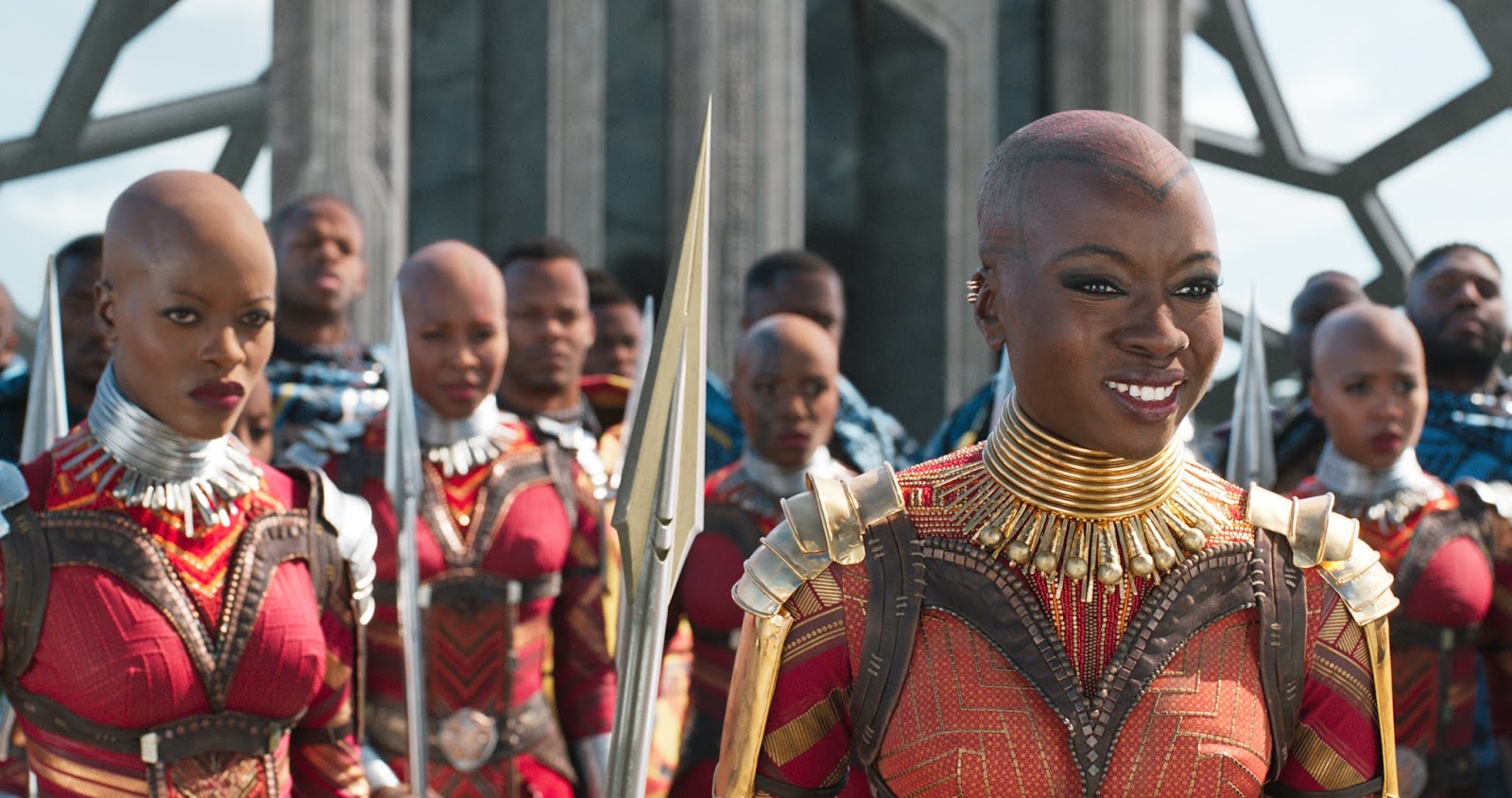
The Favourite should clean up on some of the technical awards (Cinematography, Costume, Production Design) - and rightly so.  It's visually stunning, full of sumptuous grandiosity.  But the more computer based technical awards - Visual Effects, etc. should go to Black Panther.  The spectacle of Wakanda and the world created around it is deserving of at least a few shiny gold trophies.

Best Original Score
Black Panther's score stands above the other soundtracks in the MCU, for being something bombastic and superhero-y, but also entirely of it's own.  Which seems to be descriptive of the film itself.  Ludwig Goransson has done a tremendous job.  But my personal preference would be Nicholas Brittell's score for If Beale Street Could Talk.  Sadly, a film that I believe will come away with very little, so I want it to get what it can.
Who do I want to win:  If Beale Street Could Talk
Who will win:  Black Panther

Best Picture
Which brings us to The Big One.  I'm between two - BlackkKlansman and Black Panther.

The Favourite, much as I enjoyed it, looks great, sounds great, has outstanding central performances, but it's storytelling falls away somewhat towards the end.  Likewise with A Star Is Born - I would speak about it a lot more favourably if it was half an hour shorter and didn't seem to be (unfortunately) to be a film about a woman being told what to do entirely by men.

I have very mixed feelings about Bohemian Rhapsody - it has led to a resurgence of Queen songs on the radio, which I have no issues with.  But for a band that was groundbreaking, controversial and innovative, the story told by Bohemian Rhapsody is too...easy (Queen: "we've decided to write a 6 minute epic song with an operatic middle section and we've invented the music video and our lead singer was gay at a time when it really wasn't considered ok to be so"  World according to the film: "No problem to us.  We immediately accept this unquestioningly.").  Plus, as has been documented extensively elsewhere, the timeline is all over the place and the story is, at times, wildly inaccurate.  If so, why is it a biopic?

Roma - as I have mentioned, I just don't get what the hype is about.  Although I did like the option of seeing it on Netflix rather than having to go to the cinema.  But that isn't enough to get Best Picture.

Green Book would be a "safe" win rather than, say, something more politically contentious like Vice or BlackkKlansman.

Black Panther is arguably the film that caused the discussion about introducing the Favourite Picture category.  It's the 9th highest grossing film of all time, the highest grossing film by a black director, highest grossing film for a predominantly black cast, and the first superhero film to be nominated for a Best Picture Oscar.  Plus, it's fun.  It's a good story, told well.  Roma is worthy, but Black Panther  is enjoyable.  It looks great, it sounds great, and it winning would do a lot to redress some of the damage of #Oscarssowhite.
Superhero film up for Best Picture - strange new worlds...
But the film that has most excited me this year has been BlackkKlansman.  It feels important, it feels timely, and it pulls no punches in pointing out how an undercurrent of racism in society that has allowed the Ku Klux Klan to grow and thrive has also led to the current incumbent of the White House and the Charlottesville riots.  It is funny and it is frightening.  It is a film based on a true story in which a black police officer infiltrates the KKK.  See - now you want to see it.
Also a win for best hairstyles
Who do I want to win:  BlackkKlansman or Black Panther
Who will win:  Roma

But: Best Picture for the past few years has always been a surprise.  So who knows what this year holds...

Tuesday, 6 March 2018

Black Panther

(Warning: contains spoilers for Black Panther, Wonder Woman and general MCU)

Something new from the MCU - a film where the main protagonist isn't a white man.  Gadzooks, what is this brave new world?
Black Panther
Black Panther is set in Wakanda, a nation composed of 5 tribes in Africa built on meteorite called Vibranium.  With Vibranium, they advance in terms of technology, but disguise themselves as a Third World country in order to protect what they have.  King T'Chaka's (John Kani) death leads to the throne being taken by his son T'Challa (Chadwick Boseman).  He is challenged by Killmonger (Michael B. Jordan), who provides a legitimate claim to the throne and gathers the support of a number of T'Chaka's key allies.  Power struggles ensue.
  
Black Panther, by its very existence, is going to have similar scrutiny levelled at it as Wonder Woman did last year.  Where Wonder Woman was the first non-male in a lead role (in either DC or MCU), Black Panther is the first* superhero film in the MCU to feature a black lead and predominantly black cast (apart from the Tolkien white guys Martin Freeman and Andy Serkis, and Stan Lee who turns up in a film as a stamp of MCU authenticity).  It's been a long time coming.  Wesley Snipes has been talking about trying to make a Black Panther movie since 1992.  Indeed, in 2005, the CEO of Marvel announced that Black Panther was one of ten Marvel films to be developed by the studio.  Over the past 12 years, it would seem that the film has been offered to various writers and directors (including John Singleton, Mark Bailey and Ava DuVernay) who have played with the idea and passed on it, perhaps not relishing the idea that all cultural expectation would weigh heavily on whoever made this film.

The final film was written by Joe Robert Cole (The People Vs OJ Simpson) and co-written and directed by Ryan Coogler (Creed), who accepted on the proviso that he could bring his own collaborators from different previous projects, rather than relying on the "in-house" Marvel creative team.

The result is glorious.  Having seen this film once, I already feel as though these are characters I have known for longer.  Each is well developed and realised, so that the decisions they have to make have weight and consequence.  Each has a distinct style and tone, which means that already the film has been embraced by fans and cosplayers (imperative in the geek culture).  Letitia Wright (Shuri) has been particularly singled out for praise as a teenage version of Bond's Q, but praise has generally been effusive for all the cast.

As with Spiderman: Homecoming before it, (and with a number of films already released in 2018), there was no real thing as the "good guys" and the "bad guys".  Both sides had their strengths and weaknesses, and both sides were understandable, which made tensions between lovers W'kabi (Daniel Kaluuya) and Okoye (Danai Gurira), or friends W'kabi and T'Challa more resonant.
A thing that I was particularly pleased about is that although the final battle did involve punching each other stupid, there were distinct boundaries at play so there was a real understanding of how this battle could be won and lost (Shuri used the underground trains to disrupt the Vibranium in the suits, so that T'Challa and Killmonger would be both be vulnerable when the trains were going past and could be harmed).  This is at real odds with most other superhero films where the bad guy dies for no other reason than because the script says so.

In terms of diversity, Black Panther is notable not only for it's portrayal of non-white culture, but also for it's portrayal of women.  From the Dora Milaje (the all female army of Wakanda) to Shuri, from Nakia (Lupita Nyong'o) to Ramonda (Angela Bassett) these women are strong, smart and fierce, but also independent individuals drawn as separate unique people (rather than just some female bums on seats, filling up the ranks). 
Are you excited and a bit frightened?  That is the correct response.
In thinking about it, there's a load of inclusivity and a good chance that most people can find someone to identify with.  Man? Woman? Disabled? Able bodied? Tattooed? Ink free? Scarred? Unblemished? Bald? Hirsute? Masculine? Feminine? Androgynous? There's someone for everyone.  I have seen some criticism that a potential gay storyline (between Okoye and Ayo) wound up on the cutting room floor, which is reasonable in some ways.  In other ways, sexuality can be found in the subtext if you're looking for it - in the same way it can be found in Top Gun.  And although it is definitely a film representing black culture and black experience, it is not done in a way to make it isolating.  If anything, it feels welcoming and inclusive. 
Take my breath awaaaaaay... 
The concern and scrutiny now turns to Avengers: Infinity War.  The MCU have their own raft of usual writers, directors and producers which now must work with the Black Panther team to produce something that best serves both (or risks undoing all the good feeling that Black Panther has brought to the predominantly white, male MCU).  Black Panther and Wonder Woman have both proved there is a huge market and interest in non-white, and non-male leads and stories.  In the time it's taken you to read this review, Black Panther has probably made another eleventy million pounds (as of 5th March, it's grossed $899.9 million and is the fastest Marvel film to reach the $50 million mark).  No pressure, MCU, but Wakanda forever! 

Additional thoughts, questions and comments:
  • So...all the heart shaped herbs are now gone, we assume?  How does the next Black Panther get their superpowers?
  • Killmonger specifically states that each of the marks on his body represents someone that he's killed.  Is that specific to him, or is that what all those marks mean?  W'kabi has the same marks on his face, but do they represent people he's killed?
  • Is it...a bit like The Lion King?
Blade doesn't count.  Not in the MCU.  Sorry.

Monday, 7 August 2017

Spider-Man: Homecoming

(Warning: contains spoilers for Spider-Man: Homecoming, and other Marvel films)

There are many things that the world really doesn't need right now, and another Spider-Man reboot is arguably on that list.  This is the 6th Spidey film in 15 years (without counting the cameo in Civil War) and the whole idea was starting to feel more than a little hackneyed.

Is this the poster layout for all blockbuster films now?
Kudos, then, to Marvel for reintroducing us to the webbed wonder in the form of 21-year old Tom Holland (less Holland-y than Tom Holland-er, maybe?), and not restarting the entire backstory again (surely there's only so many times that poor Uncle Ben can be killed off?).  Double kudos for managing to create a film that fits into the Marvel universe as seen thus far, whilst making a film about the teen angst of being at high school, and also adding in a reasonable villain premise and backstory.  Triple kudos for not making that film feel like an absolute grind - 2 hours 15 minutes flew by.

Marvel Cinematic Universe films have form for luring audiences in to superhero films, getting us to like them, and then bogging us down in a mire of politics and tortured conflicts, and in so doing sucking all the joy out of the character that brought us to the film in the first place (see: Thor: The Dark World, Avengers: Age of Ultron, Captain America: Civil War).  The MCU does well when it scales back, which is what it’s done here.

Spiderman: Homecoming picks up Peter Parker where we left off with him in Civil War.  There's been a clash between the various factions of Avengers (nicely referenced at the start of the film by Peter's vlog, and also quickly outlining the relationship between Peter, Happy and Tony Stark).  Peter is left vague instructions to check in with Stark via Happy, "...and y'know...we'll call you".  An excitable Peter misses that this is probably a brush-off, and drops everything he loves in his life just in case he gets a crucial Avengers call, leading to double-life conflicts with his friends (including the scene-stealing Jacob Batalon), his school, his love interest (Laura Harrier) and his Aunt May (Marisa Tomei). On the constant look-out for anything suspicious that gets his Spidey-senses tingling, he happens upon a number of unusual events and, in the absence of being able to get Happy’s attention, sets about trying to save the day himself, with varying consequences. 

The triangle between Peter, Happy and Tony is an interesting one, and it’s clear to audiences that there is a real sense that Peter is not being taken seriously.  I’m a bit confused in this because I’m not sure what else Peter was supposed to do.  He was given his hi-tech costume, and told to be patient, but there was no real sense of progression for him.  Obviously things weren’t going to end well when he found he could disable the training programmes in the suit (and there was a lot of comedic value in the various settings that had been added, as well as Peter’s chats with June, Jennifer Connelly’s Siri-like voice in his suit.  A nice real-world touch, given that Paul Bettany - Connelly’s husband - voices Jarvis in Stark’s own suits).  But what was Peter supposed to do to advance in his training, and how was he meant to graduate to the main programming?  Continuing to be patient (as instructed) would not have helped, and there was no sense that Tony intended to come back at a later stage and help out.  This is somewhat rectified by the ending where Tony offers proper mentoring at the new Stark building in recognition that the “just be patient” advice hadn’t worked for Peter, but given that it could never have worked, I’m not sure what Tony’s actual plan was.  This was subtly symbolised on the two suits Tony offered Peter.  In his first suit, the legs of the spider aren’t attached to its body, essentially rendering the creature useless.  This is rectified in the second version of the suit that Tony offers – the spider’s legs are attached, as he is offered fuller integration with the Avengers group.  I digress.

The high school plot feels well-written, and Peter’s action in his high school life has very real and very important consequences for him (think Mean Girls if Cady was also a superhero).  In fact, Peter’s high school feels real.  An ethnically and racially diverse group of students who have some great teachers (the Decathlon coach, for example) and some jaded ones (the ones who point out that Captain America is “probably a war criminal now or whatever”, but direct the students to watch the schlocky Governmentally produced films anyways).   Peter’s constant attempts to impress Tony and Happy also land well.  It’s the same issue – Peter just wants to be part of the cool gang (in his school world as well as his superhero world).  His Spiderman set pieces (the elevator in the Washington monument, the Staten Island Ferry) also feel in keeping with his Peter Parker persona – of course Spider-Man would think to look for points of strength to shoot webs to.  Peter Parker is the kind of kid who would know that stuff).

Separately from this, Michael Keaton is playing Adrian Toomes, who is making a living as the head of a salvage company clearing up the city (and finding the work to be plentiful after the Avengers have been in town).  Mercilessly driven out of business by a bigger company (contracted in part by Tony Stark), Toomes finds himself out of work and being picked on by the bigger company (in a nice, if depressing, reflection that bullies don’t just go away when you leave school).  He hits back by scavenging whatever alien technology he can find, using it to create his own alter-ego (Vulture) and selling on whatever he can’t use.  In a world where the recession is still felt, Toomes’ anger is understandable and realistic and a far cry from the pantomime versions of villains previously seen in other superhero films.  There is no “wrong” here – Tony Stark is right to want to tidy up the mess that he makes of a city in his Ironman guise, and Toomes is right to want to make a living doing what he believes he was being contracted to do.  Both opinions are morally ambiguous.  That said, did Vulture have a plan beyond “take Tony Stark’s stuff”?  I do wonder what the younger audience members made of this particular plotline. 
Michael Keaton = giant bird.  Check.
The bringing together of these two strands (the Peter Parker/Spider-Man and Adrian Toomes/Vulture strands) gets a little wobbly.  While the reveal of these two characters to each other is very well done, the showdown between them circles back to the ongoing downfall of superhero finales: no consequences unless the script says so.  Meaning that all superheroes can get beaten stupid with no real impact or effect.  And this showdown was riven with so much CGI that a lot of tension was stripped away.  A plane falls out of the sky (and it took me a moment to realise that was what had actually happened) and the biggest consequence seemed to be that Tony Stark’s stuff might have been damaged?  There was no peril, there was no danger, because at no point did I believe either Parker or Toomes would come to any harm.  That’s a sad result for what must be a multi-million dollar set-piece that will have taken hours of work from a very skilled cast and crew.    

There’s a further sinister note that isn’t commented upon – all characters at (presumably) all times are under surveillance.  From drones, from phones, from CCTV, from gadgetty doodahs in Stark suits.  Nothing is private.  This seems to be generally accepted, and perhaps in the real-world too.  There is an ethical question that has yet to be asked in the MCU – should superheroes be able to track anyone at any time without their permission, or is this just a plot device that I’m overthinking?

But these are quibbles in an otherwise entirely enjoyable romp through one part of the MCU.  Holland’s take on Spider-Man is endearing and enthusiastic and entirely likeable.  In a household where spiders are routinely trapped under cups and flung out the nearest window, I look forward to seeing more of watching this guy do whatever a spider can. 
Legitimate question
Additional thoughts, comments, questions:

1.  I particularly enjoyed the new BBFC warning: “contains concealed bad language”.  That’s right up there with “mild peril”. 

2.  Whoever thought we’d be rooting for Iron Man and Aunt May to get together? 

3.  How come high schoolers can always fit so many people in their houses at illicit parent-free parties? 

Thursday, 8 June 2017

Wonder Woman

(warning: contains spoilers for Wonder Woman, and the films of the DC and Marvel universes)

Marvel seems to have captured the mood for the superhero genre of late.  They've played a long game of drip feeding audiences with minor-character superhero movies (Iron Man, Thor) over a number of years, and then capitalising on their success by bringing them all together for ensemble extravaganzas (Avengers Assemble).  These films have balanced action, humour and pathos in roughly equal measures, and audiences have lapped it up (Avengers Assemble is the 5th highest grossing film worldwide as I write this*).  But where Marvel have been repeatedly called into question is over their portrayal of women in films.  They do well with female characters on television (Jessica Jones, Agent Carter), but the same doesn't seem to be happening for women in Marvel films.
(Exhibit A: there have been 15 films in the Marvel Cinematic Universe (MCU) with a further 9 in the pipeline over the next 2 years.  None of them have a female lead
Exhibit B: There has been repeated criticism of a lack of female merchandising, with Gamora and Black Widow repeatedly being missed off merchandising lines, despite demand.)

The DC Extended Universe have also had their criticisms.  They have had Batman and Superman in their arsenal, but have yet to make a film that hasn't been onerous, bloated, uber-serious and - at times - nonsensical (>cough< Suicide Squad >cough<).  To compare the two universes critically, Rotten Tomatoes aggregate the MCU range as between 66%-94%.  DC...don't fair as well.  Their scores range between 25%-55%.

But!  Here we have their new line of attack.  DC have brought us Wonder Woman - the first of the female led superhero films.  So if they get this right, DC have upped their game and done something to make them critically and commercially relevant again. 
So no pressure then...
So how did they do...

It's worth noting from the outset that DC have taken up quite the gauntlet.  It's not just the comic book universe that wavers in its portrayal of women - it's Hollywood in general.  There are so few films which are led by powerful females that, when one comes along, the weight of feminism is dumped upon its shoulders and judged accordingly.  Which is unfair - no one looks at Thor and critiques the themes of 21st century masculinity.  But Wonder Woman is the first female led superhero film, and so it sets the bar.
Discuss the use of hammers in Thor as critique of 21st century masculinity
There's a lot to be said for it.  Gal Gadot is tremendous in the title role, as Diana the Amazonian warrior princess who leaves the hidden paradise of Themyscira to take on Ares, god of war, on the frontlines of World War 1.  Powerful, beautiful and driven to pursue peace and a better world, Gadot is easily the best thing in this film.  She is complimented by Patty Jenkins (most notable for writing and directing 2003s Monster) under whose direction the camera focusses on our heroine, but never gratuitously.  Yes, there's still a lot of skin on display but the camera doesn't ogle or leer.  The clothes she chooses in "this world" have deliberate agency and importance to her character: "I can't fight in this", "it's choking me", "it itches".

She rescues Steve Trevor (a strong, non-Kirk performance by Chris Pine), she fights in the war, she crosses No Man's Land, she is enhanced by - not limited to - her weapons.  All her fighting has meaning and purpose and isn't just for the sake of it.  Her use of her sword is limited by choice to the person that she intended to kill with it.  Her lasso of truth is not relied upon - it's a back up to what she can already do.  She literally does what no man can do - and that is a huge tick in the box of feminism. 

This is underlined by the women of Themyscira.  Connie Nielsen, Robin Wright and the rest of their clan are gladiatorial women, fierce, real and marked with the scars of their previous battles, always preparing for a war that they hope doesn't come again.  It's an interesting contrast that the world full of women is paradise, and the world full of men is war.
Love them.  Fear them.  Don't mess with them.
For me, it's when the men appear that this film falters.  I'm not sure how people manage to find their way to Themyscira (could they always find it, but just hadn't yet?  Or is it because Diana managed to do some kind of sonic boom with her bracelets that weakened the invisibility around the island?), but they do, and Diana learns of the war and leaves paradise with Steve to go and end the fighting.  Steve has seen Diana fight, has seen her home and knows of her power, but in the "real world" wastes no time in telling her where to go, who to speak to and what to wear.  And Diana, for her part, mainly just obeys this guy she's just met who has no discernible strengths other than perhaps being a bit "above average" in the genital department.  After heading into battle, seeing Diana succeed in everything she decides to do in true superhero fashion, and being awed every time, Steve then...continues to rob her of her agency consistently until the credits roll.  He also unnecessarily gets his own "hero-arc".  I would argue that Diana brings nothing of her Themysciran self to "this world".  Her world is paradise, and ours is hell, but she doesn't appear to teach anyone anything to try to help rectify that, which feels like a real failing.

What of the other women in the "real world"?  There are two, maybe.  Lucy Davis (as Etta Candy) who is supposed to be comic relief but does little more than hold Diana's sword for a bit.  When describing her secretarial role, Diana confuses her for Steve's slave.  Then she disappears off screen and isn't seen again.
The other is Elena Anaya's Doctor Poison, a more complex and interesting character.  She's a scientist hellbent on creating a more toxic form of mustard gas (a sort of Mengele-figure), and missing half her face.  The film takes great pains to point out that Steve Trevor can't talk to her for more than 5 seconds before being distracted by someone prettier (to her justifiable outrage), but doesn't seem to do anything with that information.  It portrays her as intelligent, determined, and superior to most of the men in the film and sets her up to be the most dangerous villain of the film, and then undoes it all by revealing that all her ideas were given to her by Ares (a male god).  Gah!
It wasn't until the end of the day that Doctor Poison realised
she had forgotten to blend her foundation...
Then again, the men don't fare much better.  The band of rogues (Ewan Bremmer, Eugene Brave Rock, and Said Taghmaoui) tick the box for casting diversity but aren't particularly fleshed out as characters.  I couldn't tell you much about them other than one has some form of PTSD.
And the requisite Big Bad?  Wants to destroy the world...fights the title character in a no-stakes fight until the fighting stops and the villain is defeated for no reason other than the script says so.  Sigh.

This all sounds very damning.  It comes down to this: 

Pros:
  • Gal Gadot is the best thing in the film. 
  • Diana does what no man can do.  And that's very empowering for women.
  • It is intermittently a very entertaining film.
  • Gal Gadot and Chris Pine are very compelling to watch.
  • The film makes some decent attempts to be light-hearted in places to counteract the solemnity of the other DC films. 
  • Generally good direction, and some excellent action sequences.
Cons:
  • It would have been a much shorter film if there hadn't been such a reliance on slow-motion throughout.  Seriously.  Cut that out and we could have had a sub-2 hour film.                  
  • Some good themes which are set up but unexplored: for example - the relationship between Steve and Diana, or challenging the patriarchal society (there were so many bits where women were belittled and subjugated that I assumed it was a build up for some kind of smackdown that didn't happen).
  • Patty Jenkins was brought in when the first choice for director (male) left.  Eight of the ten producers are male.  All of the writers are male.  Would it have been better if it was more female led?  This woman wonders.
* not adjusted for inflation

Thursday, 11 May 2017

Guardians of the Galaxy 2

(warning: contains spoilers for Guardians of the Galaxy 1 and 2)

Ahhhh, that difficult second film...
After the surprise runaway hit of Guardians of the Galaxy (3 years ago.  Can you believe that?), Marvel have brought back the eponymous heroes for another film which hits the same high beats as the last one, while not getting drawn into the quagmire of "now we know the audience likes these people, let's bog them down in convoluted backstory and exposition".  The second Avengers film suffered from this ailment, and it's good to see that Marvel have side-stepped this time because this film is just fun. 
Yaaaaaaay!  Kaboom!  Pow!
The film opens with the same confident reliance on Starlord's Awesome Mix Tape (vol.2), and continues in a vein of nostalgia and pop culture references (Pac-Man, David Hasselhoff and Knight Rider to mention but three).  The plot is relatively light (Sovereign Race accept batteries in exchange for Nebula as hostage, Rocket steals batteries, chase ensues.  Meanwhile, Kurt Russell appears as Chris Pratt's estranged father... - yeah, written down that sounds weird)

The pop culture references are interesting ones.  I wonder about contemporary references, because its difficult to know how they will date a film.  If I was watching this film in 20 years time, will I necessarily recall the what is being referred to?  This is less of an issue in this film, because the references are already dated, but current culture is for nostalgia and retro, which may be part of the reason why the reaction to this film has been so joyous.  The opening scenes of the gang fighting over ELO's Mr Blue Sky was as confident and effective as Chris Pratt's dancing introduction to Redbone's Come and Get Your Love in the first film.  The audience reaction to this scene was one of utter delight in the screening I saw.

The main theme, as far as I could tell, was not a new one but it's telling was still engaging.  It was the ongoing struggle of defining what family is - family can be your biological relations, but they can also be the people that you gather around you.  Nature vs nurture.  Fate vs choice.  Biology vs circumstance.  It's a theme that plays out in a number of different ways: Gamora and Nebula are very cagey around each other due to events of the last film (and events of their entire lives together), and they both struggle to acknowledge each other as sisters, but by the end of the film they have tentatively begun to look at ways of changing their relationship with each other.  Starlord explores a relationship with Ego (his biological father), before realising that Yondu had been attempting to parent him throughout his life.  Drax continues to come to terms with the death of his family, and is looking for a replacement.  There are various endeavours to parent Baby Groot - from Gamora's nurturing of him, to Rocket's ill-advised life lessons, to Drax's constant watchfulness of him.  The characters that we already know are developed in small but significant ways as the film progresses.
Hey Baby Groot.  You are going to be very popular in merchandising...
I wasn't particularly convinced by the introduction to new character, Mantis.  An empath who can intuit the emotions of those around her by touch, she adds little to the plot although she did have some nice scenes.  The one where Drax mentioned his deceased family, and Mantis just cries in direct response, was particularly touching.  But short of helping the audience understand the characters a little better (and in no massive way that we wouldn't have guessed on our own), this character needs a little more work (especially given that she sounds pretty cool - read here)
For a film about a group of disparate individuals who are the Guardians of the Galaxy, it seems that the Galaxy doesn't need a lot of guarding.  Half the plot (the pursuit by the Sovereign Race) was an issue entirely of their own making.  That said, this was a welcome relief from the increasingly heavy world of Marvel - no mentions of politics, Infinity Stones, or the "everyone's turning against each other" plot devices of the Avengers crewSome films are a meal, and some films are just candyfloss - colourful, inconsequential, but tremendous fun.  Guess which one this is...
Enjoy...